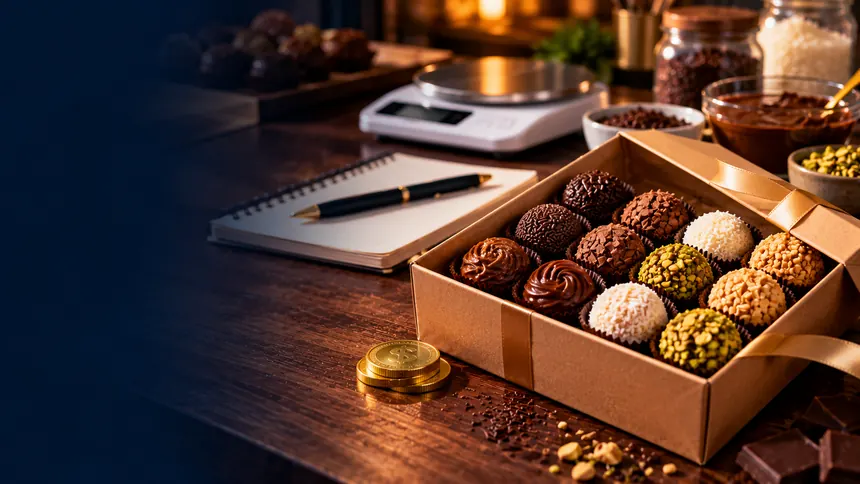
You can usually sell baked goods made in your home kitchen under your state's "cottage food" law, but there is no single national rule. Each state decides which foods are allowed, whether you must register or get a permit, how much you can sell in a year, whether you can sell online or by mail, and what the label must say. Read your state's official page first, then price each item, label every package and take orders in writing.
Cottage food rules are set state by state
The three official pages below each cite their own state law, and they differ on almost every point that matters. The table shows what each page said when I read it in October 2026. Use it to see how much states vary, not as a summary of your state.
| State and agency | Permit or registration | Sales cap on the page | Online and mail sales |
|---|---|---|---|
| Texas (DSHS) | No permit or fee for most operations. Registration is required to sell TCS foods and optional if you want a registration number on the label instead of a home address. Food handler training is required. | $150,000 a year in gross income | Allowed if you, an employee or a household member delivers personally, and the label details are posted on your website before payment. |
| California (CDPH) | Class A registers and Class B gets a permit, both through the local environmental health department. Only foods on the state's Approved Cottage Food List. | $75,000 (Class A, direct sales) or $150,000 (Class B, direct and indirect sales). CDPH also posts a yearly adjusted limit. | Direct sales can be taken by phone or internet and filled in person, by mail or through third-party delivery, within the state. |
| Florida (FDACS) | No FDACS permit or license, and no state inspection. | $250,000 a year in gross sales | Online orders, online payment and mail-order sales are allowed. No sales to restaurants, stores or wholesalers. |
Rules move. Texas's page describes a 2025 law (SB 541) that widened the allowed foods and set the cap above, California points to a separate yearly document for adjusted limits, and Florida's fact sheet is dated July 2021. Read your state's current page and write to the agency if anything is unclear.
A recipe can be fine in one state and restricted in another. Florida's fact sheet lists cream cheese and butter icings as prohibited TCS foods, meaning foods that need time and temperature control for safety. Texas's page says operations may sell TCS foods if they register with DSHS and follow extra labeling rules.
What federal rules still apply
State laws decide who may sell and how, but packaged food labels still follow FDA's allergen rules. FDA lists nine major allergens: milk, eggs, fish, crustacean shellfish, tree nuts, peanuts, wheat, soybeans and sesame, and says sesame has had to be labeled on packaged foods since January 1, 2023 (FDA). You can name an allergen in the ingredient list, in a "Contains" statement, or in parentheses after the ingredient it comes from.
Nutrition Facts are a separate question. FDA's small business guide (revised October 5, 2026) describes exemptions for retailers with annual gross sales of no more than $500,000, or annual gross sales of food to consumers of no more than $50,000. The exemption does not apply if the label or advertising carries a nutrient content claim, a health claim or other nutrition information, and the ingredient statement, net quantity and name and address stay required (FDA). Your state page tells you whether it expects a nutrition panel.
Taxes are federal too. Sole proprietors report business income and expenses on Schedule C, and if net earnings from self-employment are $400 or more, Schedule SE applies as well (IRS). Check the current-year instructions, because thresholds and rates can change. Sales tax on baked goods is a state question, so ask your state department of revenue.
Five checks before you sell anything
- Find your state's cottage food page. Search for your state name plus "cottage food" and stay on .gov results. Result: you have the rules in the agency's own words.
- Check each product against the allowed list. Fillings, creams, cheesecakes and anything refrigerated deserve a closer look. Result: a short list of items you may sell.
- Note registration, permit and training. Some states want a local registration, some a training certificate, some neither.
- Check the cap and the channels. All three pages above count gross sales, not profit. Look at whether you may sell online, by mail, to stores or across state lines. California's page defines direct sales as transactions within the state, Texas ties online sales to personal delivery, and Florida's sheet does not mention shipping across state lines, so ask the agency before you ship.
- Check local rules. City or county zoning, a lease or an HOA can restrict home businesses even where the state allows them. Ask your insurer whether home business activity is covered.
Labeling checklist
Your state page is the final word on label content. Based on the pages above and FDA, a home-baked product label usually needs:
- the common name of the product;
- your business name and address, or the registration number where your state allows it (Texas does);
- ingredients in descending order by weight, with sub-ingredients (Florida's sheet asks for this);
- net weight or volume (Florida);
- every major allergen named, with the specific tree nut;
- the state's home-kitchen disclosure, copied word for word. Texas and Florida each prescribe their own wording;
- a date made or safe-handling instructions where the state asks for them, such as Texas for TCS foods;
- a nutrition panel only if your state or a nutrition claim requires it.
Price each item: a worked example
This example uses invented numbers. Replace them with your own receipts and your own hourly rate. It prices a box of 6 brownies from a batch of 24 (4 boxes).
| Cost item (per batch of 24) | Example amount |
|---|---|
| Ingredients, weighed and costed | $18.00 |
| Packaging, 4 boxes at $1.20 (box, liner, label) | $4.80 |
| Utilities and supplies | $2.40 |
| Your time, 1.5 hours at $15.00 | $22.50 |
| Total for the batch | $47.70 |
| Cost per box | $11.93 |
Now add what you want to keep. Say card fees take 3% of the price (check your processor) and you want a 20% margin. Both percentages apply to the selling price, so you divide instead of multiply: $11.925 / (1 - 0.03 - 0.20) = $15.49, which you round to $15.50. At $15.50 the fee is about $0.47 and you keep about $3.11, or 20%.
Adding 20% to the cost gives $14.31 and leaves about $1.96 after fees, closer to 14%. Pricing that way can leave you busy and underpaid. If your fair price is above local competitors, improve the packaging or the product before cutting it.
Take orders in writing
- Publish a short menu. Prices, minimum order, lead time, pickup or delivery options and the allergens in each item. A clear phone photo helps more than a long description.
- Take the order by text, DM or form. If you use WhatsApp Business, a catalog and saved replies cut the typing.
- Confirm in one message. Items, price, date, pickup time or address, allergens and the customer's name. The order is real once the customer replies "confirmed".
- Ask for a deposit on big or custom orders. Decide your policy in advance and state it in the menu, including what happens if the customer cancels.
- Cap your calendar. Set a maximum number of orders per day and close the schedule when it fills.
- Label, hand over and record. Every package carries its label. For online sales, follow your state's rule on delivery and shipping. Log each sale for taxes and for the sales cap, for example in a simple spreadsheet.
When cottage food rules stop fitting
The pages above show where the limits tend to sit: sales to stores or restaurants (Florida bars them, Texas allows only certain wholesale to registered vendors, California's Class B permits indirect sales), higher-risk foods, and sales above the cap. If you want to sell through shops, ship nationwide or pass the cap, ask your state agency about a licensed commercial kitchen or a food establishment permit.
Sources: Texas DSHS, California CDPH, Florida FDACS (fact sheet revised 07/21), FDA and IRS. Caps, allowed foods and label wording change, so confirm everything on your state's current official page.
Frequently asked questions
Do I need a license to sell cakes and cookies from home?
It depends on your state. Texas's page says most cottage food operations need no permit or fee, California requires registration or a permit through the local environmental health department, and Florida needs no FDACS license. Check your own state's page.
Can I ship baked goods to customers in other states?
The state pages I read do not settle this. California defines a direct sale as a transaction within the state, Texas allows online sales when you deliver personally, and Florida's sheet does not address shipping across state lines. Ask your state agency before you ship across state lines.
Do I have to list allergens on homemade baked goods?
FDA requires packaged foods to declare the nine major allergens, including sesame since January 1, 2023, and state cottage food labels typically require them too. Name each one, and name the specific tree nut.
How much does a home baker have to track for taxes?
The IRS says sole proprietors report income and expenses on Schedule C, and use Schedule SE when net self-employment earnings are $400 or more. Keep a record of every sale, receipt and mileage trip.
Sources: Texas DSHS: Texas Cottage Food Production · California CDPH: Cottage Food Operations requirements (Class A and Class B) · California CDPH: Cottage Food Operations · Florida FDACS: Cottage Food Operations fact sheet (rev. 07/21) · FDA: FASTER Act, sesame is the ninth major food allergen · FDA: Small Business Nutrition Labeling Exemption Guide · IRS: Schedule C and Schedule SE frequently asked questions