Security
AI Voice Scams: Protect Your Family
Criminals can clone a loved one's voice from seconds of audio. Here's how to protect your family.
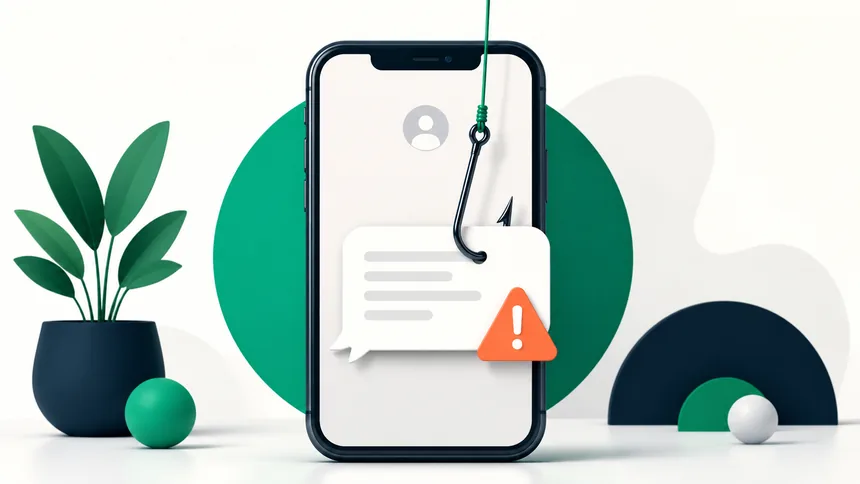
That text about a "missed delivery" or an "unpaid toll" isn't just annoying — it's part of one of the fastest-growing crimes in the country. According to the U.S. Federal Trade Commission, Americans lost around $470 million to scams that started with a text message in a single recent year, roughly five times the losses reported just four years earlier. The good news: almost every one of these scams collapses under the same simple check. Here's how to spot them.
Smishing is simply phishing delivered by text message (SMS + phishing). Instead of an email, a fraudulent message lands in your texts pretending to be a delivery company, your bank, a government agency, or even a stranger who "texted the wrong number." The goal is always one of three things: get you to tap a malicious link, hand over personal or banking details, or send money. The same tricks now show up inside WhatsApp and other messaging apps too.
Fraud reports cluster around a handful of proven schemes. If you recognize these five, you're already ahead of most victims.
A text claiming to be from USPS, FedEx, DHL, or Amazon says there's a "problem" with your package — an incomplete address or a small customs fee — and gives a link to "fix" it. It's the single most reported text scam, and it works because most of us are waiting on something.
A message warns of an outstanding toll balance and threatens a late fee unless you pay "immediately." The FBI has issued specific warnings about these road-toll texts. Real toll authorities don't collect small balances by surprise text with a random link.
"Suspicious login detected." "Your card was used for a $600 purchase — was this you?" These impersonate your bank, Netflix, Amazon, or Apple, hoping panic makes you tap before you think.
A friendly stranger texts as if they meant to reach someone else. If you reply, they strike up a chat over days or weeks, build trust, and eventually steer you toward a fake investment or crypto "opportunity." Never replying is the whole defense.
An unsolicited text offers easy money for simple online "tasks." These task scams start with tiny fake payouts, then ask you to deposit your own money to "unlock" bigger earnings that never come.
The old advice — "look for bad spelling" — no longer works. Scammers now use AI to write clean, natural messages, copy real company logos, and build fake websites nearly identical to the originals. Some even spoof a real business phone number. In other words, a scam text can look completely legitimate. That's why you can't rely on how a message looks anymore. You have to rely on how it behaves.
Before you tap anything, ask one question: "Did I expect this, and is it pressuring me to hurry?" Almost every scam fails this test, because two ingredients are nearly always present:
If both boxes are checked, treat the message as a scam. Then verify independently: instead of tapping the link, open the company's official app or type its real website address yourself. Legitimate organizations are fine with you taking your time — scammers are not.
Don't panic — act quickly:
You can forward suspected spam texts to 7726 (it spells "SPAM") to alert your carrier, then block and delete the number. In the U.S., report the scam to the FTC at reportfraud.ftc.gov. Reporting helps investigators track new waves before they reach your family.
One more habit worth building: if a message ever seems to come from someone you know but sounds off, verify it another way. That same instinct protects you from an even newer threat — AI voice-cloning scams, where criminals fake a loved one's voice on a phone call.
Watch for three signs together: it's unexpected, it pressures you to act fast, and it contains a link or a request for personal information. Legitimate companies rarely combine all three.
No. Replying anything — even "STOP" — confirms your number is active and can bring more scams. Block and delete instead, and forward it to 7726.
Tapping alone is usually less dangerous than entering information. If you typed a password or payment details, change passwords and contact your bank immediately, then enable two-factor authentication.
Criminals can clone a loved one's voice from seconds of audio. Here's how to protect your family.
The overlooked features — from Back Tap to document scanning — that save you time every day.
7 fast checks to tell a scam shop from a real one — before you ever enter your card details.