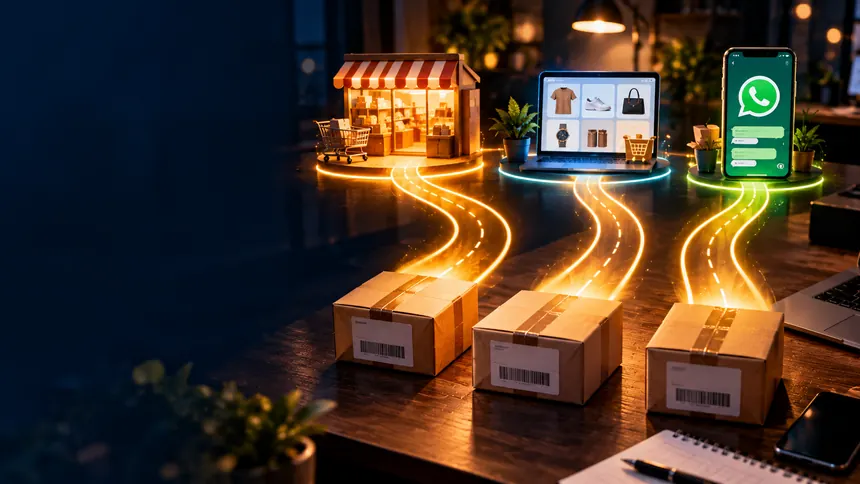
There is no single best place to sell online, only a best fit for what you sell. Marketplaces such as Etsy, eBay and Amazon bring the buyers and take a cut of every sale. Your own store keeps the margin and the customer, but the traffic is your job. Social media and local pickup cost almost nothing in fees and sell more slowly, one message at a time. Most small sellers start on one marketplace and add other channels once they know what sells.
The four ways to sell, and what each one asks of you
- Marketplaces (Amazon, eBay, Etsy). Shoppers, checkout and shipping tools are already there. In exchange the platform charges fees and keeps the relationship with the buyer. On Amazon, for example, you can ship orders yourself or use Fulfillment by Amazon for storage and delivery.
- Your own store (Shopify and similar builders). Your brand, your checkout and no marketplace commission. You pay a plan fee and card processing instead, and nobody arrives unless you bring them through search, email, social posts or ads.
- Social selling (Instagram, Facebook, TikTok). There are two different things here. You can use social posts to attract buyers and take the order by message or payment link, which carries no platform commission. Or you can use a platform's in-app shop and checkout, where that platform's seller terms and fees apply.
- Local pickup. No packaging, no postage and no waiting for a carrier. It suits bulky items, used goods and anything buyers want to see first. The FTC notes that many sites recommend selling to a local buyer you can meet in person and accepting only cash.
Which channel fits what you sell
Use this table to pick a first channel, not a final one. The right-hand column is the trade-off you accept.
| What you sell | Start here | Add later | What to watch |
|---|---|---|---|
| Handmade goods, crafts, art | Etsy | Instagram, your own store | Fees on every sale; photos decide who gets clicked |
| New products shoppers search by name | Amazon or eBay | Your own store | Price competition and thin margin after fees and shipping |
| Used items and one-offs | eBay, or a local pickup listing | Nothing, usually | Each item needs its own listing and its own fee check |
| Bulky or heavy items | Local pickup listings | Shipped sales for small parts | Postage can cost more than the item is worth |
| Your own brand with repeat buyers | Your own store | A marketplace for discovery | Traffic, which only you can generate |
| Baked goods, prepared food | Local pickup plus social and direct messages | Online ordering on your own site | State and local food rules come first |
| Services and digital products | Your own site or store | A marketplace whose policy allows it | Read each platform's seller policy before you list |
How to compare fees before you commit
Platforms name their charges differently, but they fall into the same buckets: a fee to list, a fee when the item sells (a percentage of the order, often plus a fixed amount per order), payment processing, a subscription, and optional extras such as ads, shipping labels or fulfillment. Two questions save the most surprises. Does the percentage apply to shipping too? And is payment processing included or billed separately? eBay's page says the total amount of the sale includes shipping you collect, handling and sales tax. Etsy's transaction fee applies to the whole order amount, including shipping and gift wrap if you charge for them.
This is what the official seller pages listed when we opened them in October 2026. Fees change, so confirm on each page before you set prices.
| Channel | Fees on the official page |
|---|---|
| Etsy | $0.20 per listing; 6.5% transaction fee on the total order amount; a payment processing fee on Etsy Payments sales, shown as a fixed amount plus a percentage that varies by country; Etsy Ads, Offsite Ads and shipping labels cost extra |
| eBay | Up to 250 zero-insertion-fee listings a month, then $0.35 per listing in most categories; a final value fee of 13.6% on sales up to $7,500 in most categories (other categories differ) plus $0.30 per order up to $10 or $0.40 above; no separate third-party payment processing fee |
| Amazon | Individual plan at $0.99 per item sold, or Professional plan at $39.99 a month; a referral fee on top, which is a percentage of the price that varies by category, with a minimum amount; Fulfillment by Amazon costs extra |
| Your own store (Shopify) | Basic plan listed at $29 a month billed yearly or $39 billed monthly, with card rates from 2.9% plus 30 cents; higher plans have lower card rates |
Sales tax and income: what to check
The United States has no national sales tax, so the rules depend on the states where you and your buyers are. The SBA says sales tax can vary significantly from place to place and points sellers to their state and local government websites. Two states show how much the details differ.
- Washington. The Department of Revenue's marketplace sellers page says the marketplace facilitator collects and pays sales tax on facilitated sales, but sellers that meet the state's criteria still have to report those sales for B&O tax. Remote sellers must register and collect sales tax once their combined Washington gross receipts, marketplace sales included, pass $100,000.
- Texas. The Comptroller's FAQ on remote sellers and marketplaces says a marketplace provider must certify to you that it will collect the tax, a Texas-based seller still needs a sales and use tax permit, and remote sellers must collect tax on their own-website sales above a $500,000 threshold that counts marketplace sales too (page last modified January 2025).
The takeaway is not the numbers. It is that the answer depends on your state, on whether a marketplace collects for you, and on what you sell from your own site. Look up your state's tax agency, ask whether you need a permit (the name varies by state), and keep records of every sale.
Income tax is separate. The IRS's page on Form 1099-K, reviewed in October 2026, says payment apps and online marketplaces must send the form when payments for goods or services exceed $20,000 across more than 200 transactions, and may send one for less. It also says that whether or not you receive a form, you must report all income from selling goods or services. Reporting rules change, so confirm the current figures on IRS.gov.
Rules that follow you to every channel
- Shipping promises. Under the FTC's Mail, Internet, or Telephone Order Merchandise Rule, you need a reasonable basis for any shipping time you state, or for believing you can ship within 30 days if you state none, and if you cannot ship on time you must ask the buyer's consent to the delay and offer a free way to cancel. If you cannot ship, you must refund without being asked.
- Payment scams. The FTC's advice for online sellers is never to deposit a check for more than the selling price and not to accept a mobile payment from someone you do not know. Fake payment notifications are a common trick, so ship only after the money is really in your account.
- Regulated goods. For food, the FDA says requirements vary with the product and the facility, and that local health agencies issue licenses or permits for food prepared and sold to consumers. Check with your local health department before you list anything you cook.
- Platform rules. Every marketplace and social shop has its own seller policy covering what you can sell.
A simple way to start
- Pick one channel from the table. Expected result: one account to learn instead of four to manage.
- List five to ten items with clear photos and honest shipping costs. Our guide to photographing products with your phone covers the basics.
- Run the fee sum on each item. Expected result: a take-home figure per sale that you trust.
- Check your state's sales tax page and any local license rules. Expected result: you know whether you need a permit before the first sale.
- Add a second channel after your first ten sales. A local listing or WhatsApp Business suits repeat buyers, and a local presence helps through a Google Business Profile. When buyers search for you by name, build your own store.
Official sources: seller pages for Etsy, eBay, Amazon and Shopify (figures as shown in October 2026), IRS, SBA, FTC, FDA and the Washington and Texas tax agencies. Fees, thresholds and tax rules change, so confirm each one on the official page before you rely on it.
Frequently asked questions
Is it better to sell on a marketplace or on my own website?
For a first product, a marketplace is usually faster because buyers, checkout and shipping tools are already there, and the price is a fee on each sale. Your own store keeps the margin and the customer but needs you to bring the traffic, so it fits once you have repeat buyers or a steady source of visitors.
Do I have to charge sales tax if I sell on Etsy, eBay or Amazon?
It depends on your state. Washington and Texas both say the marketplace collects the tax on facilitated sales, but sellers may still have to register, report or hold a permit, and sales from your own site can be treated differently. Check your state tax agency's website.
Will I get a Form 1099-K if I sell online?
The IRS says online marketplaces and payment apps must send one when payments for goods or services exceed $20,000 across more than 200 transactions, and may send one for less. Whether or not you get the form, you must report all of the income.
What is the cheapest way to start selling online?
Selling through social posts and local pickup carries no platform commission. Among marketplaces, eBay's fee page lists up to 250 zero-insertion-fee listings a month, though a final value fee applies when an item sells. Check the current terms before you start.
Sources: Etsy Help: Etsy Fee Basics · eBay: Selling fees · Amazon: How much does it cost to sell on Amazon? · Shopify: Pricing · IRS: Understanding your Form 1099-K · SBA: Launch your business · Washington Department of Revenue: Marketplace sellers · Texas Comptroller: Remote Sellers and Marketplace Frequently Asked Questions · FTC: Business Guide to the Mail, Internet, or Telephone Order Merchandise Rule · FTC Consumer Advice: Selling stuff online? Here's how to avoid a scam · FDA: How to Start a Food Business